
How Can Indian Factories Sell Excess Steel Inventory and Scrap Online?
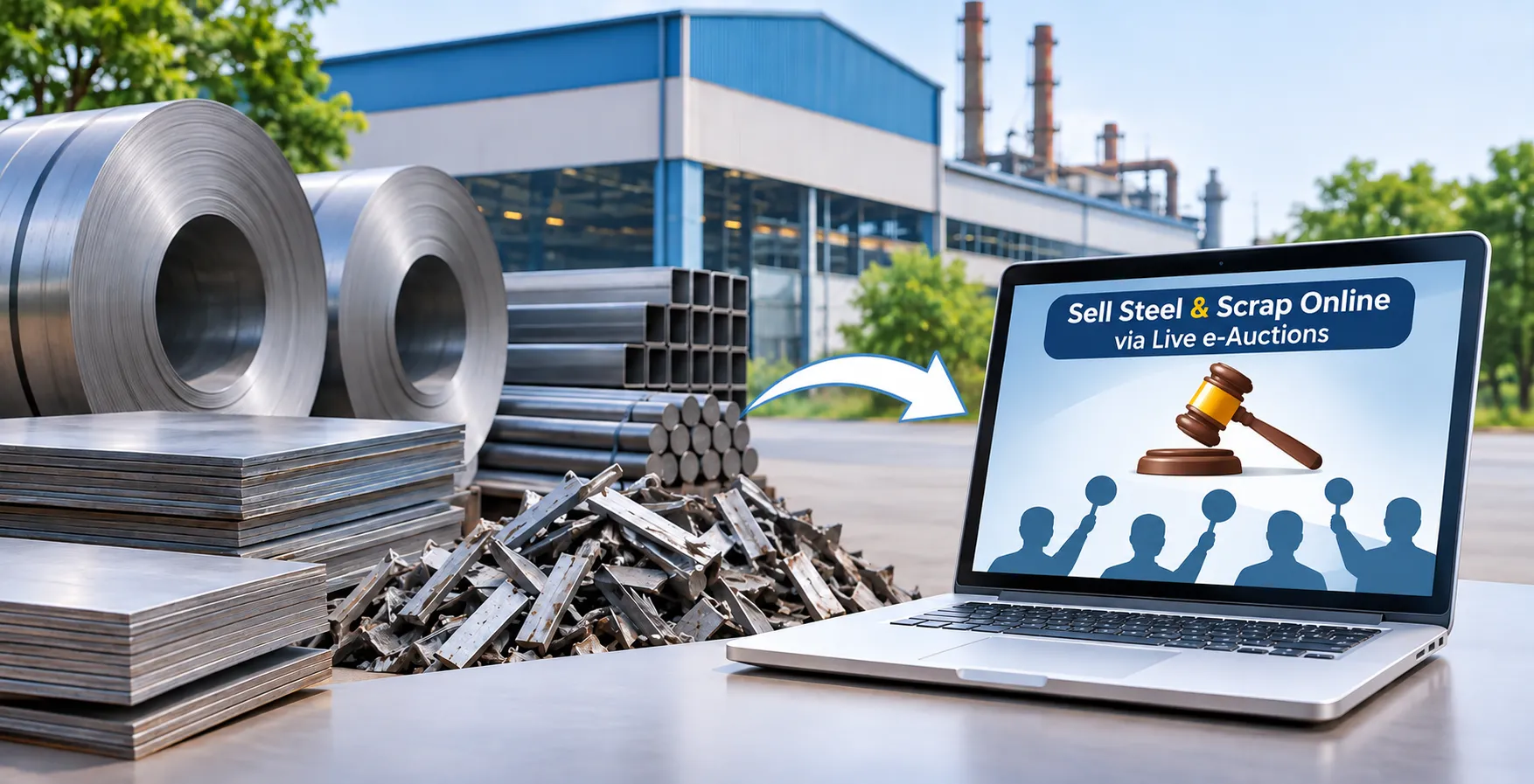
Excess steel stock and scrap can tie up working capital, occupy valuable warehouse space, and lose value if it sits too long. Selling online can help factories reach more buyers and compare offers but a successful sale depends on accurate material details, transparent pricing, and a safe plan for payment and dispatch.
Here’s a practical process Indian factories can follow with examples of how each step works on TechESteel, a B2B steel marketplace Indian factories can use to sell through live e-auctions.
1. Identify and document the material
Before listing anything, separate reusable steel inventory from scrap. Surplus coils, sheets, plates, bars, and sections may be suitable for resale; offcuts, process scrap, and unusable material may need to be sold by grade or scrap category.
Prepare a clear inventory record for each lot, including:
- Product type, grade, dimensions, and quantity
- Whether the material is prime, excess, secondary, or scrap
- Available inspection or test documents
- Storage location and loading arrangements
- Recent photographs showing the material and its condition
For scrap, describe the material honestly and consistently. Buyers need enough information to assess quality, expected yield, and transport requirements.
2. Set a realistic asking price
Start by checking current market conditions for comparable material. Prices can vary with grade, size, condition, quantity, location, and demand. For scrap, contamination, sorting, and preparation can also affect the offer.
Decide whether you want to set a fixed asking price, invite quotations, or sell through an auction. An auction can help reveal what multiple interested buyers are willing to pay, while a fixed price may suit standardized inventory with a clear market value. On TechESteel, lots are sold through live e-auctions so the prices come from competing bids by verified buyers.
Be explicit about what the price includes. State whether loading, transport, taxes, testing, or other charges are included or handled separately. This helps prevent misunderstandings after a buyer has been selected.
3. Choose a suitable online selling channel
Factories can sell through established steel or industrial marketplaces, online auctions, or their own buyer networks. The right route depends on the lot size, material type, urgency, and how much support is needed during the transaction.
When evaluating a platform, check:
- Whether it attracts buyers for your specific material
- How buyers and sellers are verified
- How bids, negotiations, and fees are handled
- What payment safeguards are available
- Whether logistics or other fulfilment services are offered
TechESteel is built around these checks. Our members are verified buyers and sellers, bidding happens in the open, every transaction carries NeML-backed payment, and the platform does not trade on its own account. You can read more on Why TechESteel works this way.
A digital marketplace can extend your reach beyond local contacts and make price discovery more transparent. It does not remove the need to review the terms of sale and verify every transaction.
4. Create a complete listing
A strong listing makes it easier for serious buyers to assess the lot and submit comparable offers. Use a specific title, such as “Surplus HR Coils – Grade IS 2062 E250, 4.5mm × 1200mm, 28.67MT Maharashtra.”
Include the material description, quantity, condition, location, inspection options, dispatch timeline, and sale terms. Upload current photographs and relevant documentation where available. If the lot is sold as-is or the buyer must inspect it before bidding, state that clearly.
5. Verify buyers and agree on the terms
For large or high-value lots, do not rely on informal messages alone. Use the platform’s documented transaction process where applicable, and confirm that the payment arrangement is in place before releasing the goods. If a platform offers payment assurance or settlement support, understand exactly how it works and what conditions apply. On TechESteel, settlement runs through NCDEX e Markets Limited (NeML), which is designed to reduce payment and counterparty risk.
6. Plan weighing, loading, and transport
Logistics can change the economics of a steel sale, especially when material is bulky or stored far from the buyer. Decide who arranges the vehicle, loading equipment, weighbridge process, and transport insurance before dispatch.
Record the material’s condition and weight at handover, and keep copies of the sale confirmation, weighment records, dispatch documents, and payment records. For scrap, agree in advance on how deductions or quality disputes will be assessed.
7. Review compliance and records
The appropriate documentation can depend on the transaction, material, and the parties involved. Confirm invoicing, tax, transport, waste-handling, and other applicable requirements with your finance or compliance team or a qualified adviser. Keep the listing, buyer communications, sale documents, and dispatch records together for future reference.
Turn surplus stock into a more structured sale
Selling excess steel inventory or scrap online works best when factories treat it as a managed transaction not simply a post on a marketplace. Accurate listings, credible buyer checks, clear sale terms, and planned logistics all help reduce friction and improve the chance of a completed sale.
TechESteel gives Indian factories a transparent digital platform to compare verified buyer reach, live price discovery, escrow settlement, and dispatch support. Factory scrap buyers India-wide see your lot at the same time, so the price reflects real demand on the day.
Here is an example: A manufacturing unit in Nashik has 25 MT of mixed scrap in its yard. It lists the lot with grade, quantity, photographs and the location. Verified buyers bid in the open auction and the unit watches every offer arrive. Its price is set by competing bids rather than a single phone negotiation, and the final amount depends on what the buyer is willing to pay.
You can request a demo to see how our auctions work.
Ready to Liquidate Excess Stock or Factory Scrap?
Stop letting slow-moving coils, plates, or plant scrap lock up your cash flow. You can browse the scrap category to see live market demand or explore our full product range across flat and long steel products.
- Want to list your first lot? Register as a verified member with your company GST, PAN, and cancelled cheque to activate your seller dashboard.
Frequently Asked Questions (FAQs)
1. What types of steel and scrap can factories sell on TechESteel?
Factories can list both reusable surplus inventory (HR Coils, CR Coils, GP/GC Sheets, Plates, Pipes, Structural Steel, and Bars) as well as industrial process scrap (HMS 1 & 2, shredded scrap, offcuts, end-bits, and turning/boring scrap).
2. How is seller payment guaranteed on TechESteel?
Every auction transaction is settled through NCDEX e Markets Limited (NeML) escrow. Winning buyers deposit the full transaction value plus GST into escrow before lifting the material, protecting factories against payment defaults or delays.
3. What documents are required to register as a seller?
Factories only need standard corporate KYC documents: Company GST Certificate, Company PAN Card, Authorized Signatory ID proof, a Cancelled Cheque matching the registered company name, and an Authorization Letter.